Begin with a point of view, not a product list
A brand is more than a name applied to an object. It has a particular way of using colour, a sense of proportion, a relationship with materials and a place in its customers’ lives. Developing an accessory collection begins by understanding that point of view. Before deciding what to make, the useful question is what a piece should express, and why it belongs to this house.
At Plastoria, design and product development sit at the heart of the company. Our designers explore the identity and positioning of the brands we work with, then translate that understanding into objects. The aim is a recognisable connection between the brand and the product, carried through its shape, its finish and the experience of using it. A logo can identify a piece; the design should give it character.
Turn the brand brief into a design brief
A productive brief connects creative ambition with a real context. Who will choose the accessory? Who will use it? Is it intended for a retail collection, a corporate gifting programme or a bespoke commission? What should it communicate at first glance, and what should someone appreciate after living with it? These questions help establish a direction before individual products are selected.
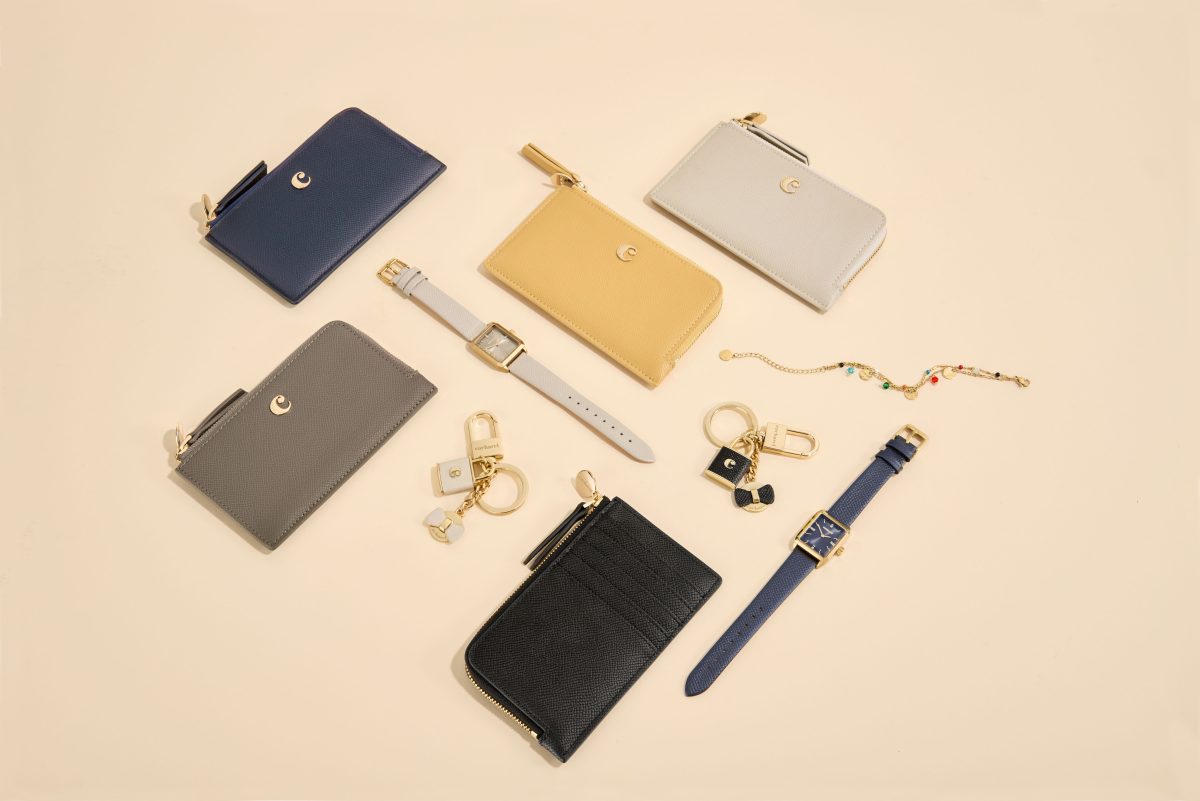
Consider a brand exploring a writing instrument and a small leather accessory. The two products need not look identical. They might share a particular metal finish, a treatment of edges or a colour relationship. The designer’s task is to find a common language that remains convincing across different materials and functions. That coherence matters especially when the pieces are presented together as a gift.
Make the details do meaningful work
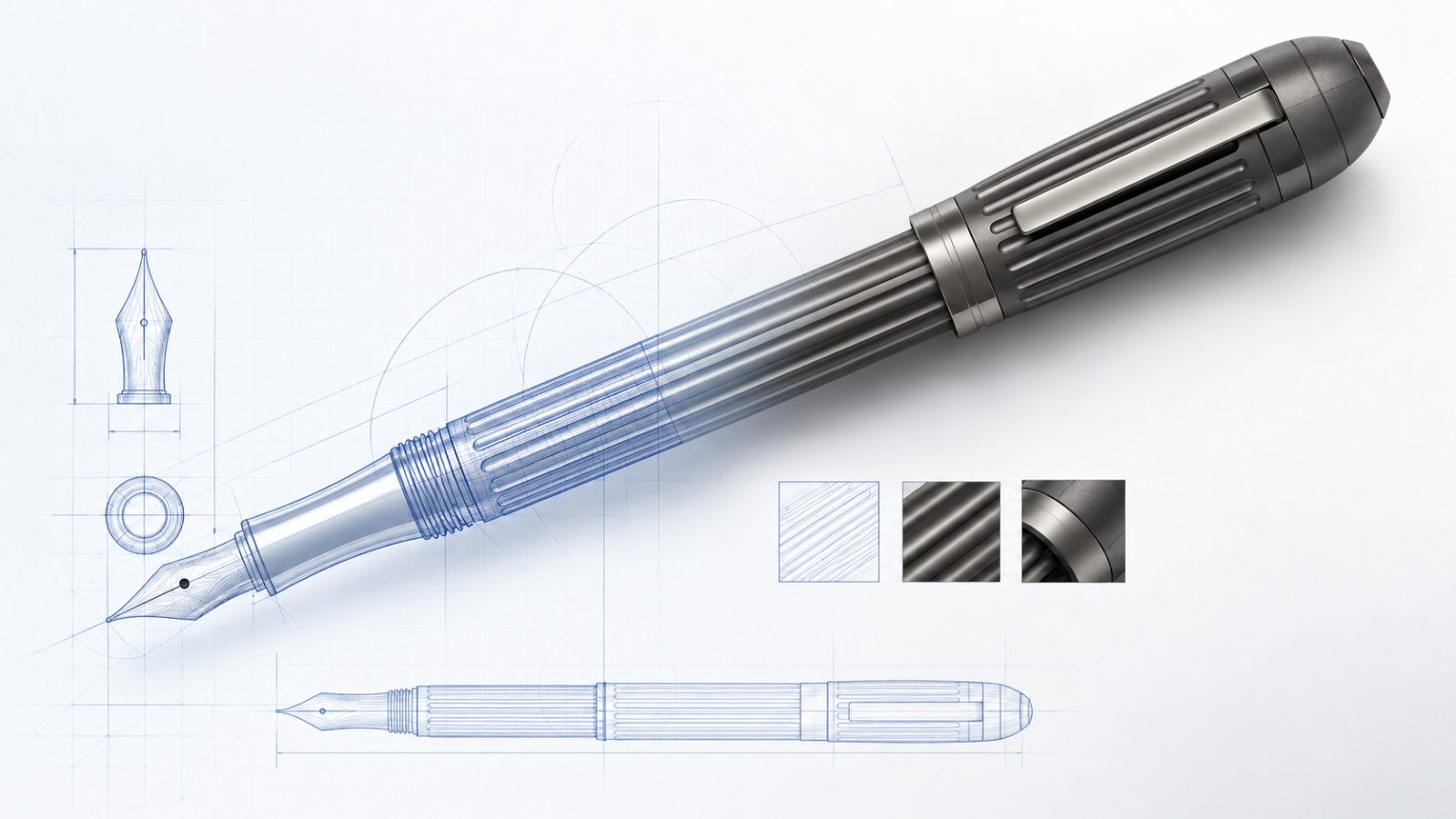
The pen design shown above illustrates the conversation between drawing and material. Construction lines describe an object’s proportions; the rendered surface suggests how it might feel in the hand. A drawing can raise questions about the silhouette, the clip or the relationship between the cap and barrel. A finish study opens a different discussion about texture, contrast and light.
These choices need to serve the object as well as its appearance. For a writing instrument, balance and grip are part of the experience. For a card holder, the opening, the arrangement of compartments and the treatment of seams matter. For a travel accessory, access and everyday handling deserve attention alongside its visual presence. A refined result comes from considering these details together, rather than treating decoration as the final step.
Develop a family, with room for individual character
A collection should offer useful relationships between pieces. A customer may choose one object, return for another or discover several together in a presentation box. Shared colours, finishes and design details can make those choices feel connected without requiring every product to repeat the same formula.
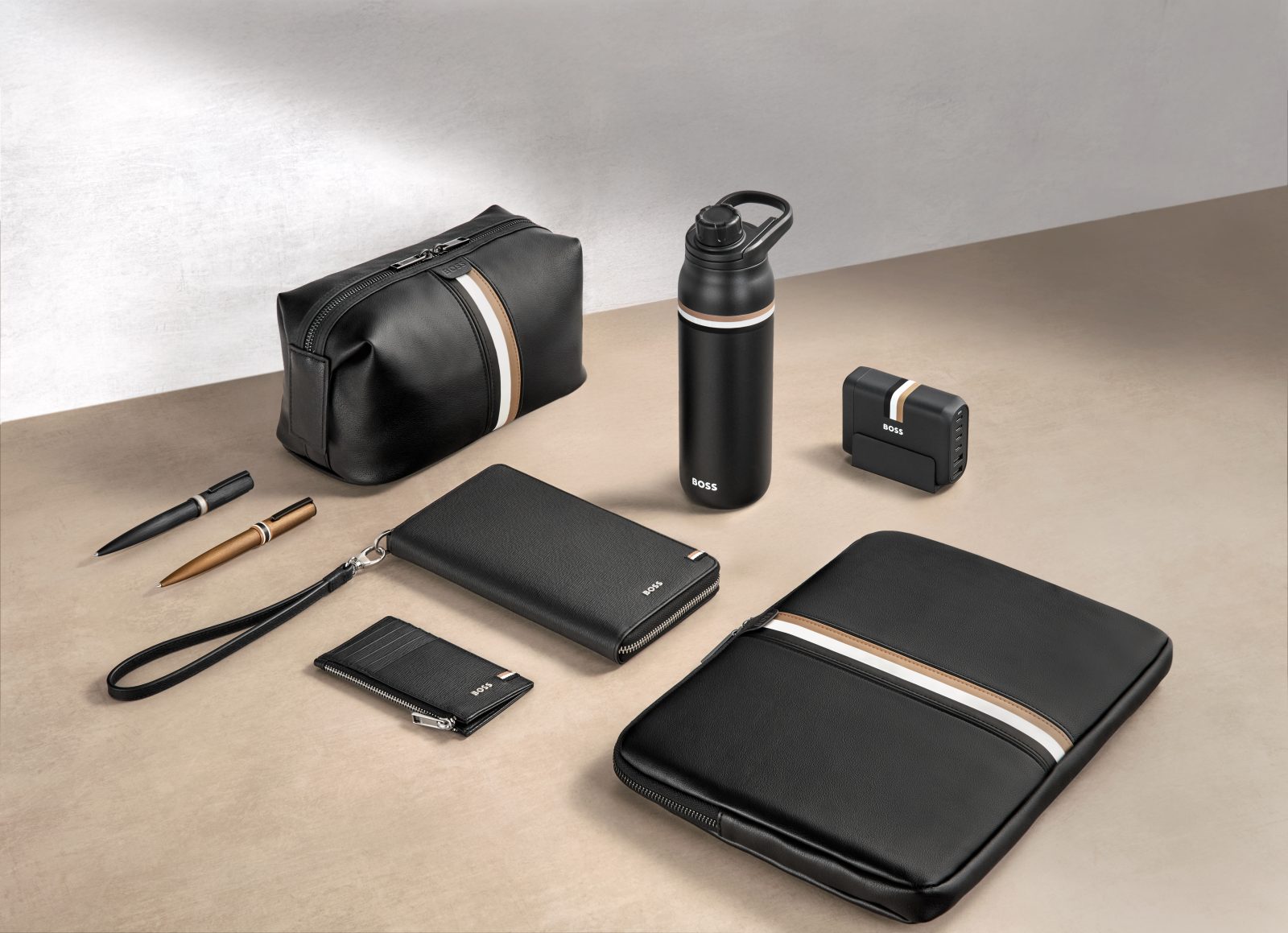
Imagine a travel pouch, a card holder and a pen developed around a restrained material palette. The pouch can provide the collection’s main statement through its shape and texture, while the smaller pieces carry subtler references to the same identity. This illustrative design scenario shows how a collection can remain coherent while accommodating different uses, price points and gifting occasions.
Carry the intention through development
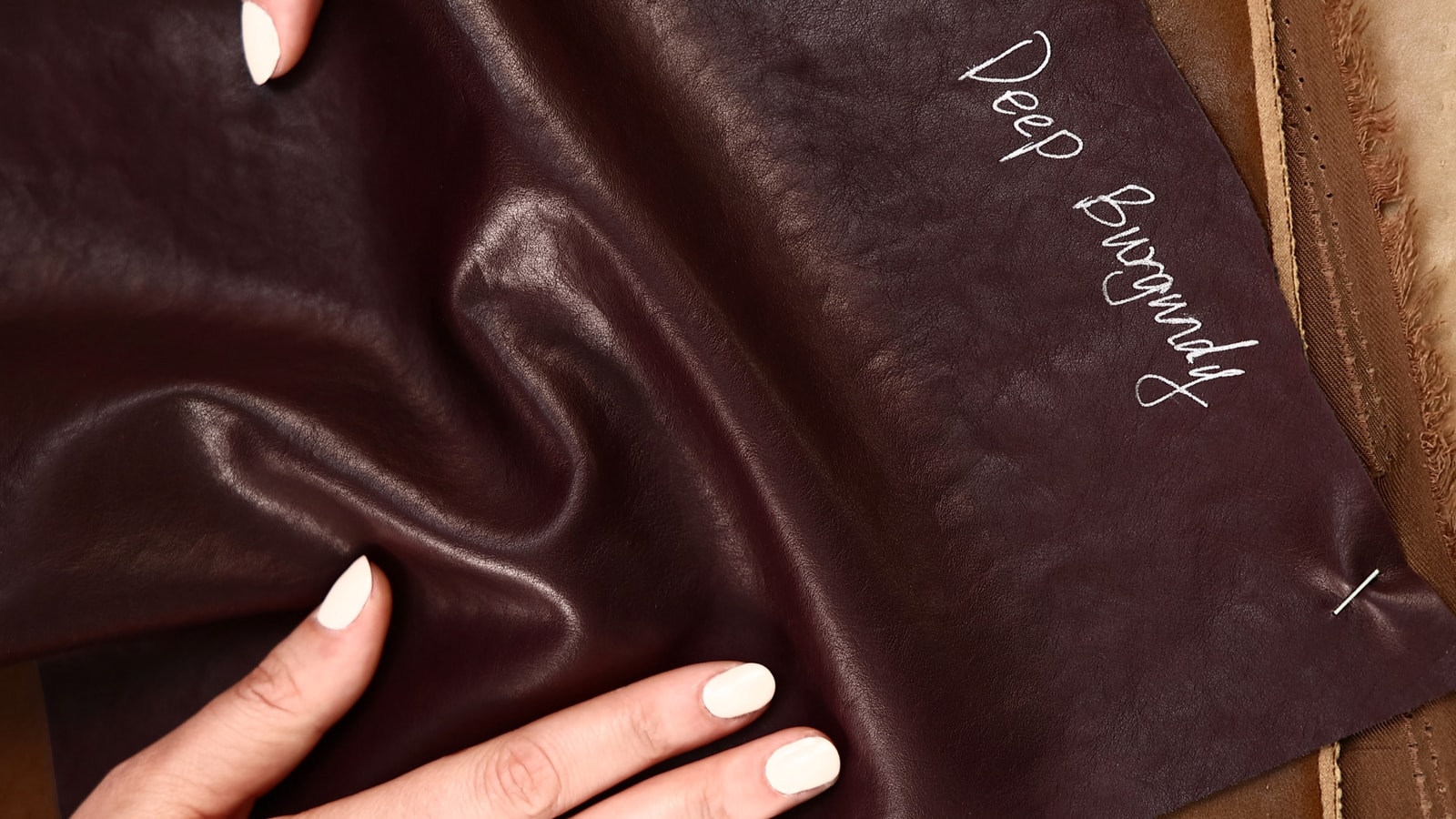
An appealing concept is the beginning of the work. Product development connects the creative direction with materials, construction, specifications and production. Prototypes and samples create opportunities to assess how the idea behaves as an object: what feels convincing, what needs refinement and which details deserve a closer look.
For a brand partner, this is where a clear brief and a shared understanding become especially valuable. Decisions about finish, function, presentation and commercial requirements influence one another. Discussing them as a connected project helps keep the collection’s identity in view as practical choices are made. Plastoria brings its design and development expertise into that conversation, and coordinates production with its manufacturing partners.
Choose the right form of collaboration
Under a licensing partnership, we design and develop accessory collections, and coordinate their manufacturing, with a long-term view of the brand, its products and their distribution. A bespoke development starts with the particular ambition of a brand or company: one distinctive object, a coordinated selection or a product created for a specific purpose. The scope of design, prototyping, production and logistics is shaped around that brief.
Neither conversation needs to begin with a finished specification. A clear account of the audience, the brand and the desired experience can be more useful than a long list of predetermined features. Our role is to help turn that direction into a development approach, while making the creative and practical choices understandable to the people involved.
Think beyond the finished object
A collection also needs a considered route to its audience. Presentation, product information and the way pieces are grouped can influence how the brand is understood. Corporate gifting introduces questions about the occasion, personalisation and delivery to recipients. Retail brings its own requirements around assortment and the customer’s experience across stores and online channels.
Through PLASTORIA’s corporate gifting network and the retail expertise of our sister company, DISTRI-BRANDS, we connect these perspectives with product development. The ambition is consistent from the first brief onwards: a collection that expresses the brand clearly, functions well in its intended setting and rewards the attention of the person who receives or chooses it.